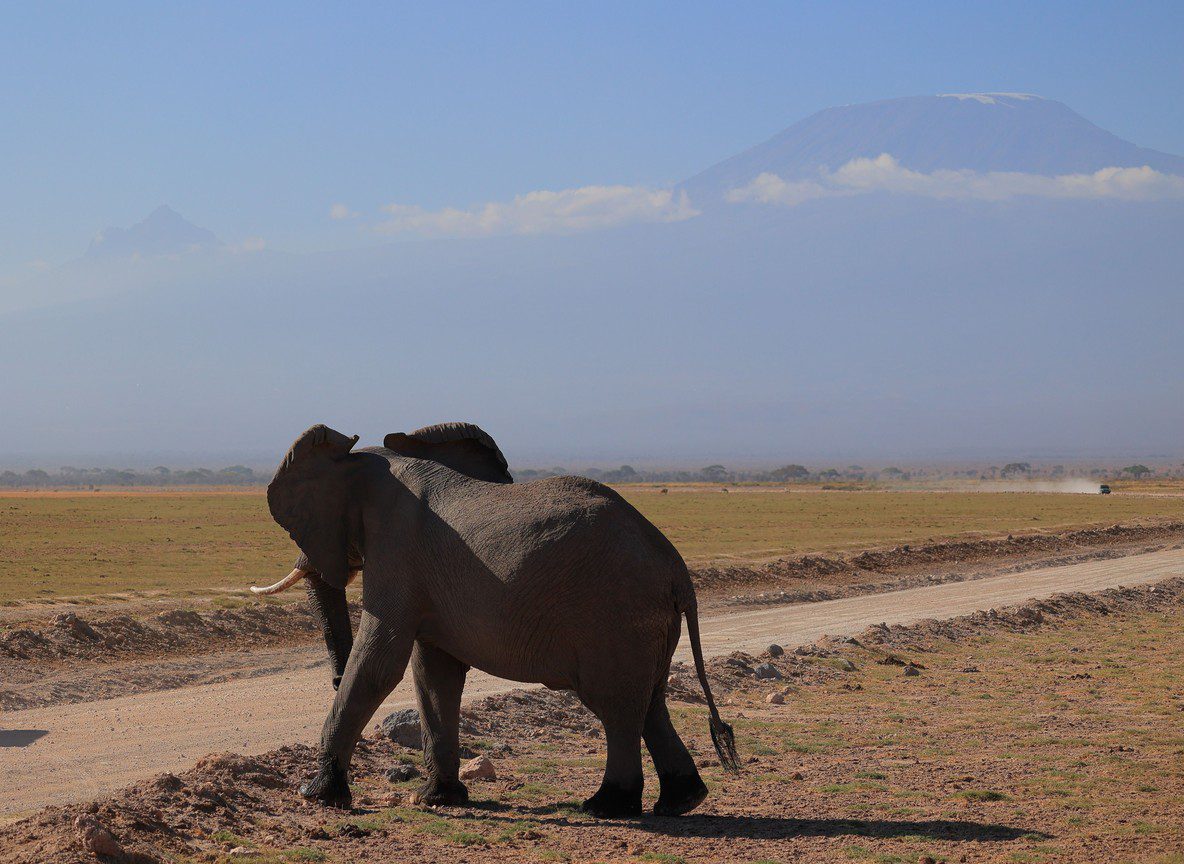
Vehicle choice shapes an Amboseli safari more than first-time visitors usually expect. The right vehicle improves photography, ride comfort, rough-road confidence, and how much useful time you spend in the field. The wrong one creates frustration at the exact moments the trip should be most rewarding: when elephants are close, when Kilimanjaro appears behind the herd, when you need to reposition quickly for the right angle.
This guide covers the main vehicle options in detail, when each works best, and the private-vs-shared decision that matters almost as much as vehicle type itself.
Why Vehicle Choice Matters in Amboseli Specifically
Amboseli looks like a simple park from the outside: open plains, big skies, good visibility. But the experience in a vehicle is more nuanced than that description suggests.
Dust is a constant in the dry season and affects both passenger comfort and camera equipment. Different vehicle setups handle dust exposure very differently.
Road conditions vary considerably between the main highway, the gate approach sections, and the tracks inside the park. After rain, some sections become genuinely challenging for lower-clearance vehicles.
Photography positioning in Amboseli depends heavily on vehicle height, roof access, and the ability to move quickly to a better angle before a herd moves or the Kilimanjaro cloud drops back.
Private vs shared matters throughout: how long you spend at a sighting, where you position relative to other vehicles, whether you can wait out a slow moment for better behaviour.
These variables make vehicle selection a real planning decision rather than a background detail.
The 4×4 Land Cruiser: The Strongest All-Round Choice
For the majority of Amboseli visitors, the 4×4 Land Cruiser, typically a Toyota Land Cruiser with pop-up roof, is the best answer. Its dominance in Kenya’s safari vehicle fleet is not accidental.
Why it leads:
- Ground clearance handles gate approach roads and in-park tracks across all seasons
- Pop-up roof allows standing photography without obstruction from vehicle frames or roof panels
- Seating for six to eight passengers in private configurations provides space for luggage, camera gear, and comfort on long drives
- Reliability in rough conditions is better than lighter vehicles
- Standard equipment for most established guided safari programmes
Best fit:
- First-time safari visitors who want a reliable, versatile option
- Private safaris where the vehicle is dedicated to one group
- Families who need space and comfort
- Photographers who need roof access and the ability to stand and shoot at any angle
- Any trip that involves mixed weather or travel in the shoulder or wet seasons
The 4×4 Land Cruiser is the correct default recommendation for Amboseli. Most visitors who ask which vehicle to book should start here and only deviate if a specific reason justifies a different choice.
When the 4×4 Matters Most
The conditions where the Land Cruiser’s advantages become most visible:
- Gate approach roads after rain, where lower-clearance vehicles struggle
- Long game drives where seat comfort and roof access determine whether you can spend six hours productively in the field
- Photography-focused safaris where vehicle height and roof opening are load-bearing decisions
- Private itineraries where fast repositioning for an elephant or Kilimanjaro shot is the priority
In these situations, the gap between a Land Cruiser and the alternatives is not marginal.
The Safari Van: Value-Focused and More Conditional
Safari vans, typically Toyota Hiace-style vehicles modified for game viewing, remain common in the budget and group-tour segments of the Kenya safari market. They are a workable choice in specific circumstances and a poor one in others.
Arguments for the safari van:
- Lower cost, which matters at the budget end of the market
- Sufficient for general wildlife sightseeing in dry conditions
- Can carry more passengers than a Land Cruiser when group size is the priority
Genuine trade-offs:
- Lower ground clearance than a 4×4, which creates real difficulty on gate approach roads in wet or mixed conditions
- Pop-up roof hatches are available in some configurations but generally provide less photography flexibility than a fully open roof
- The ride quality on rough sections is noticeably worse
- The overall experience feels more utilitarian and less matched to a park-quality wildlife environment
Best fit:
- Budget travellers for whom the cost saving is the deciding factor
- Short dry-season trips on established routes where road conditions are predictable
- Groups where the per-vehicle cost savings are significant and comfort is not the priority
For most Amboseli visitors, the safari van is a compromise rather than a choice. It is the right answer when budget absolutely requires it, and a weaker one when alternatives are accessible.
Open-Sided Vehicles: Best for Immersion and Photography
Open-sided vehicles, broadly defined as modified Land Rovers, Land Cruisers, or similar 4×4 platforms with the doors and some panels removed to expose passengers to the environment, are not the standard vehicle inside Amboseli National Park. Kenya Wildlife Service regulations and general practice in national parks mean most game drives run in fully enclosed vehicles with pop-up roofs.
Open-sided vehicles become relevant in the Amboseli ecosystem conversation through the private conservancies that border the national park. Properties like Satao Elerai and some others offer game drives on conservancy land where different vehicle types are used, including open-sided vehicles for guests who want a more immersive experience.
Why open-sided vehicles stand out when available:
- No windows or panels obstructing photographs in any direction
- Closer sensory connection to the environment: wind, sounds, scents
- Stronger atmospheric feeling on game drives
- More flexible positioning for photography at close range
Real trade-offs:
- Direct dust exposure: at Amboseli in the dry season, open-sided vehicles mean significant dust
- No weather protection: rain becomes a serious issue for passengers and camera equipment
- Not suited to all traveller types: the exposure that excites a repeat safari visitor can be uncomfortable for someone on their first trip
Best fit:
- Serious photographers who want maximum lens flexibility and the ability to shoot in any direction
- Repeat safari visitors looking for a different, more immersive quality of game drive
- Guests specifically booking conservancy experiences where this vehicle type is part of the product
Private vs Shared Vehicle: The Decision That Matters Most
The choice between a private and shared vehicle is sometimes more important to the quality of the game drive than the vehicle type itself.
Private vehicle:
A dedicated vehicle with only your group means:
- Complete control over timing: you stop when you want, stay when you want, move when you want
- Photography positioning is determined by what your guide judges best for your shot, not by the majority opinion of six strangers
- Family rhythm is yours: if a child needs a break or a snack, the vehicle stops
- The pacing of the whole game drive reflects your priorities
Private vehicles cost more. For most photographers, most couples, and most families, the premium is worth it.
Shared vehicle:
A shared vehicle means cost savings and these specific trade-offs:
- Stop duration and sighting time are negotiated across the group’s interests
- Photography positioning happens when it suits the group, not when it suits your subject
- Departure and return timing reflects the majority rather than any individual’s preference
- In Amboseli, where waiting for an elephant bull to raise his head in good light can take 20 minutes of stillness, sharing a vehicle with guests who want to move on is a real constraint
Shared vehicles work acceptably for general wildlife sightseeing where the goal is seeing animals rather than capturing specific behaviour or images. For anyone with a specific photography ambition or a clear priority in how they use game-drive time, private is the appropriate choice.
Best Vehicle for Photography
If photography is a priority, the vehicle decision follows this hierarchy:
- Private 4×4 Land Cruiser with full pop-up roof
- Open-sided private vehicle in conservancy areas where available
- Private safari van only when budget requires it and conditions are dry
- Shared vehicle of any type as a last resort
The reasoning: photography requires stopping at the right moment, positioning at the right angle, and waiting for the right behaviour. None of those things are fully possible in a shared vehicle with competing interests. The Land Cruiser’s pop-up roof allows standing shots in all directions. Open-sided vehicles offer even more freedom where they are available.
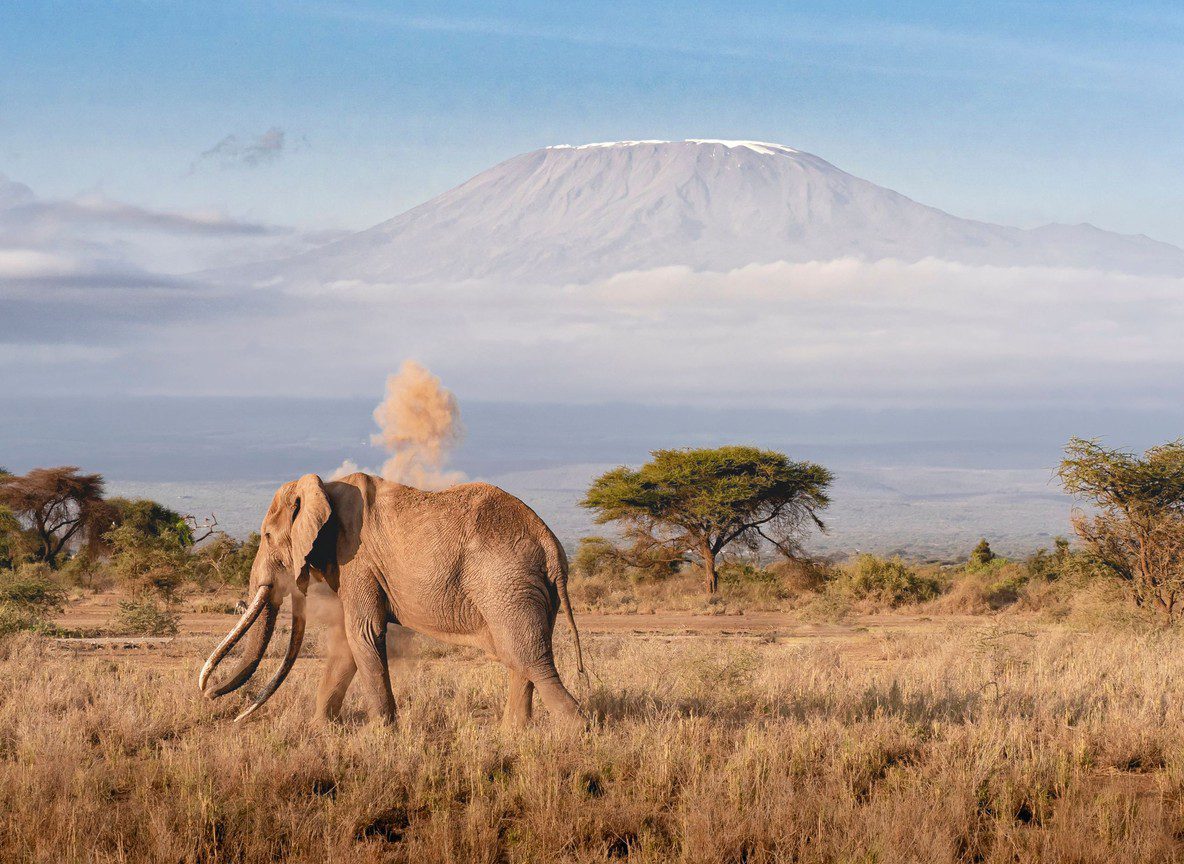
The Kilimanjaro-elephant composition that Amboseli is famous for requires specific vehicle positioning: south of a herd in the early morning with the mountain behind the animals. Getting that shot requires a private vehicle and a guide who understands what you are trying to achieve.
Best Vehicle for Families
Families generally do best in a private 4×4 Land Cruiser.
The reasons are practical rather than aspirational:
- Longer wheelbase and better suspension make the rough approach roads and in-park tracks more tolerable for children over extended drives
- Private scheduling means bathroom stops, snack breaks, and pacing can be managed without affecting other passengers
- Space for luggage, camera bags, and children’s items is significantly better than in a van
- No competing interests when a child is restless or wants to look at something specific
The shared vehicle saving rarely justifies the practical difficulty of managing family needs in a vehicle with strangers on long game drives. The upgrade to private is one of the cleaner value-for-money decisions on a family safari.
Quick Comparison: Amboseli Safari Vehicle Options
| Vehicle Type | Best For | Main Strength | Main Trade-Off |
|---|---|---|---|
| 4×4 Land Cruiser (private) | Most visitors | Best all-round: comfort, flexibility, rough-road confidence | Higher cost than shared or van |
| 4×4 Land Cruiser (shared) | Value-led sightseeing | Lower cost | Less flexibility and photography control |
| Safari Van (private) | Budget trips in dry season | Cost saving | Less refined, less suited to rough sections or wet season |
| Open-Sided 4×4 (private) | Photography and immersion | Best atmosphere, no panel obstructions | Dust exposure, limited weather protection |
Practical Advice for Booking
When reviewing any Amboseli package, confirm:
- What vehicle type is included
- Whether the vehicle is private or shared
- Whether a pop-up roof is available (not all safari vehicles have this)
- The seat capacity and how many guests will share the vehicle if it is not private
- Whether the vehicle is appropriate for the season and road conditions expected
If the operator cannot answer these questions specifically, ask more. Vehicle specifications that are left vague in a quote are often a sign that the actual vehicle is more basic than the marketing suggests.
Conclusion
Vehicle choice in Amboseli is not a peripheral booking detail. It shapes every game drive: how long you stay at a sighting, how you photograph it, how comfortable you are on rough sections between animals, and how much flexibility your guide has to position for the best experience.
The 4×4 Land Cruiser in private configuration is the strongest starting recommendation for most visitors. Deviations from that baseline should be made for clear reasons, whether that is cost, group size, or a specific interest in open-sided conservancy driving. When in doubt, default to the better vehicle and the private setup. The game drives are where the safari actually happens, and the vehicle determines how well they work.
What to Read Next
- Amboseli safari cost guide – how vehicle type and private vs shared affect the total safari price
- Amboseli safari from Nairobi guide – road vs fly-in access, with notes on vehicle logistics for each
- Amboseli road conditions guide – why vehicle clearance and 4×4 capability matter on the gate approach sections
- Amboseli luxury safari guide – how vehicle and guiding quality change at the premium end
If this guide has you ready to travel, a safari specialist can handle the route, camps, and logistics end to end.
Want to Book a Tour With Us?